Where you live influences what jobs you can access, what schools your child can attend, how you move around your neighborhood, what environmental health risks you are exposed to, what networks you establish, and what amenities are available to you. Research suggests that where you live can also determine your cardiovascular health and even how long you live. Understanding housing access and affordability in the context of other neighborhood characteristics is necessary to create inclusive, well-resourced neighborhoods where all people can thrive.
But neighborhoods across the US currently face a fair and affordable housing crisis. Home prices and rents have outpaced incomes and supply has dwindled, restricting access to high-opportunity neighborhoods. As momentum to address this crisis increases, local leaders are tasked with deciding how to allocate resources among housing-focused policies and programs that meet the needs of community members. Data are a critical resource for leaders to make informed decisions. But in the past year, many public data sources have been removed or altered, and new data releases have been delayed. This has limited access to high-quality data for decisionmakers and advocates.
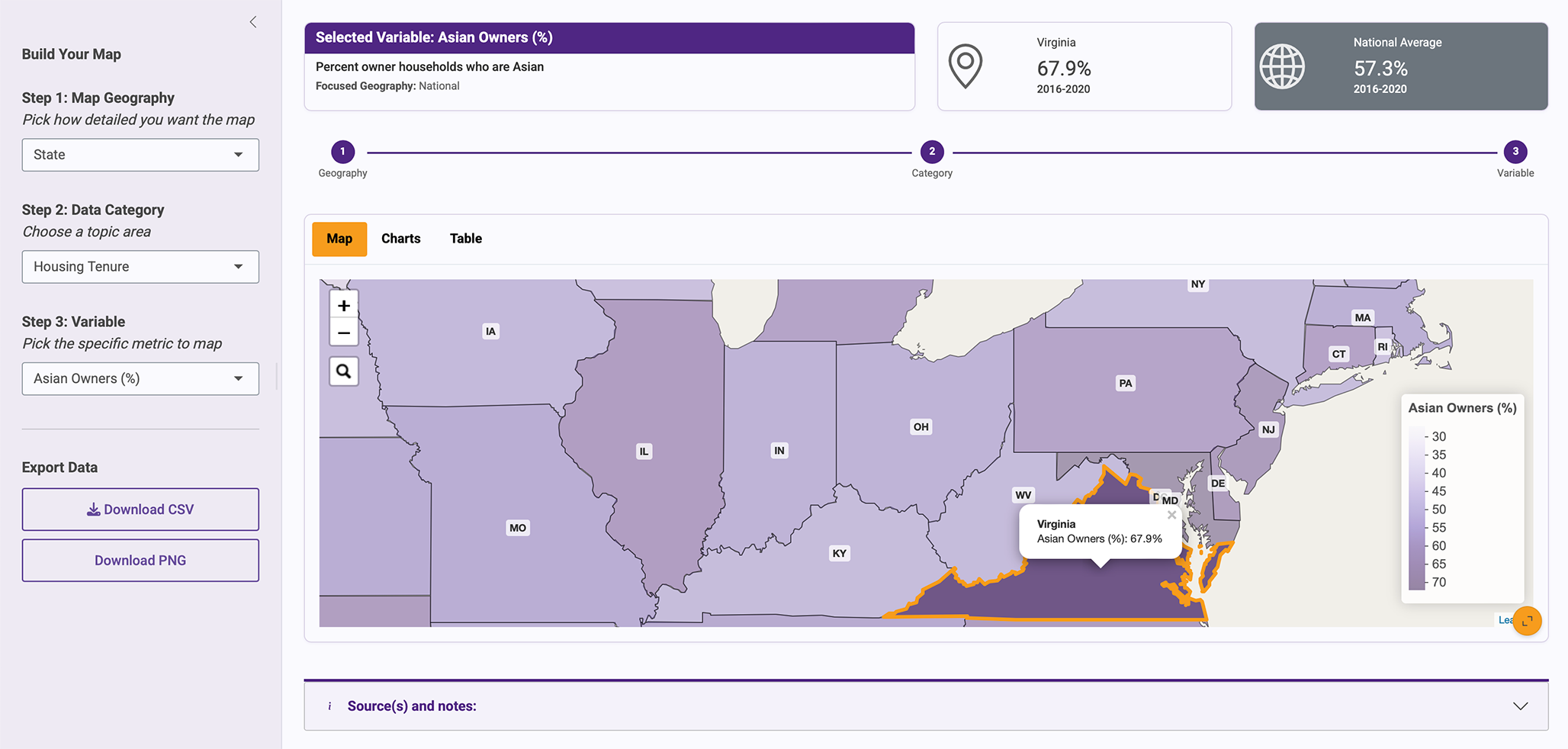
Local stakeholders need data to make effective housing decisions and encourage fair access to high-quality housing. The National Fair Housing Alliance, in collaboration with the Urban Institute, has created a Fair Housing Data Mapping Tool to fill this gap. The tool restores access to the public data and maps that previously helped elected leaders, housing providers, fair housing advocates, and everyday people better understand their local housing needs and allocate resources.
How the Fair Housing Data Mapping Tool can support local planning
The tool includes many of the same datasets and maps that were included in the Assessment of Fair Housing tool, which supported the goals of the Fair Housing Act of 1968.
The tool includes state, county, and tract-level data that show users where housing is located and how it interacts with other parts of daily life, such as jobs, education, environmental risks, and quality of life. The data include commonly used housing metrics, such as housing tenure, housing problems (e.g., housing cost burden, substandard facilities), and mortgage applications and denials. They also include a range of population-level data, such as poverty levels and disability prevalence, with which to understand local populations’ needs. And the tool includes a range of indicators that inform people’s housing choices, such as local school quality, proximity to jobs, and transportation access.
In addition, users can see how trends differ over time, for different places, and for different groups.
Policymakers, advocates, and community-based organizations can use these secondary data to identify the most critical issues in their communities and data-informed pathways for action. Potential uses for the data include the following:
- Identifying key issues: Each community faces unique housing challenges. Understanding how housing options differ throughout a region is one important way to identify gaps and challenges. The information in the Fair Housing Data Mapping Tool can help users identify areas where, for example, school scores are lowor environmental risks are high. In this way, users can see not just where housing is unaffordable, but how housing may influence and be influenced by other community characteristics.
- Creating a plan of action: The Fair Housing Data Mapping Tool provides visuals and data points that can help local stakeholders identify and reach consensus on local challenges and the types of interventions needed to address them. For example, a city council member may look at their city and see a large and growing number of housing challenges. This tool can help them view where certain of those challenges may be persistent, such as in what neighborhoods home mortgage application denials are increasing or housing affordability is decreasing. And it can help them see where many challenges are converging, such as a neighborhood where schools face performance challenges, rising housing costs outpace wages, and environmental burdens affect the health of the community. Reviewing the data over time and using the tool’s data mapping features can help.
- Establishing buy-in: Features of the tool can help users get buy-in and feedback from community members. Local maps, for example, provide visual opportunities for community members to measure their lived experiences against larger trends. Similarly, by bringing together data on areas that are often siloed (e.g., education, jobs, environment, housing), organizations working in those areas can better connect and collaborate and craft more cohesive messaging and plans for action. For example, school officials may be able to use the tool’s mapping and data features to engage local families about challenges that affect educational outcomes, such as environmental health risks.
- Measuring success and impact: The data and metrics in the tool can be used to set targets and measure action. And communities can continue to view their progress over time as the tool is updated with additional data. This can help policymakers track their success and help community members hold policymakers accountable for creating resilient, well-resourced communities.
The Fair Housing Data Mapping Tool fills an important gap
As everyday people continue to navigate the nation’s fair and affordable housing crisis, it will be critical for local actors to work across fields, such as housing, transportation, education, and health, to create communities that are accessible and deliver opportunity for all. The Fair Housing Data Mapping Tool provides high-quality data that local leaders and advocates need to work together to build the future we all deserve.