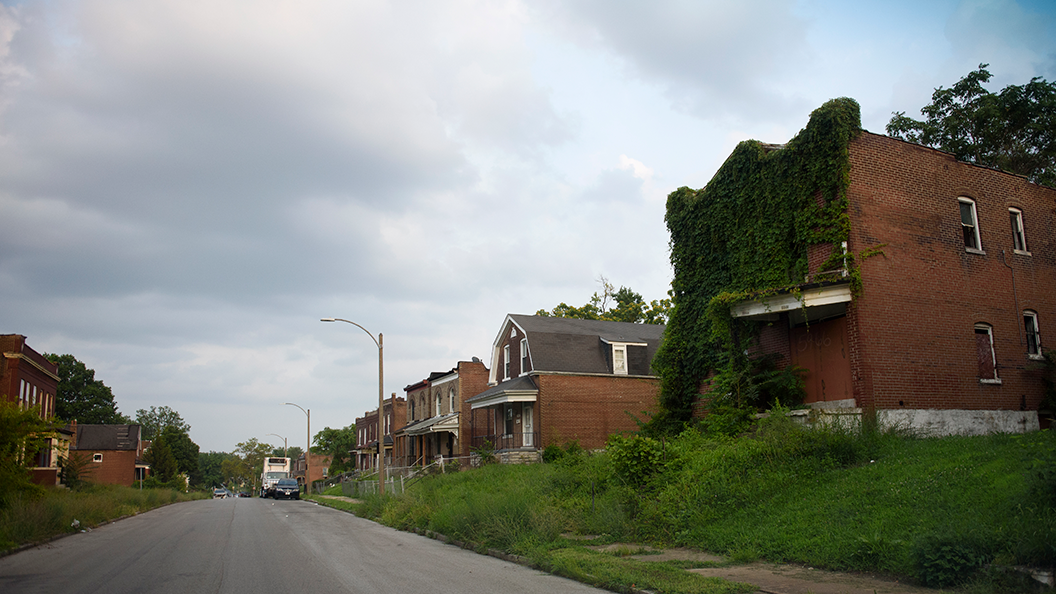
Communities across the country are facing a housing shortage (PDF), prompting local policymakers to make way for more—particularly affordable options for middle- and lower-income families.
In Tulsa, like many US cities, the housing shortage has reached a crisis point. A recent housing assessment estimated that the city needs 4,000 units now and projected that, over the next 10 years, it will need an additional 12,900 units. As part of a project examining how to increase affordable housing production in Oklahoma, Oklahoma stakeholders highlighted the persistent challenge of putting vacant properties in cities like Tulsa into productive use.
Strategies other municipalities are undertaking to incentivize bringing vacant properties into productive use—including improving the accuracy of vacancy data, developing systems to manage vacancies, and implementing policies and programs to incentivize vacant property conversion into available housing—offer lessons for Tulsa and any community seeking to address the housing supply crisis.
Returning vacant properties to productive use can be less expensive and easier to approve
Tulsa stakeholders noted that vacant and blighted properties provide an opportunity to create newly habitable housing through renovation and remediation, which can be both less expensive and less controversial with neighbors.
In Tulsa, slightly more than 10 percent, or almost 20,000 housing units, were vacant as of 2024, according to the nonprofit Housing Forward (only about a third of these were available for occupancy, meaning the rest likely were in substandard condition).
If even a portion of these properties were returned to use, it could meet current demand for 4,000 units. However, the current process for converting vacant or blighted properties in Tulsa is challenging. The foreclosure process is slow—by state law, the city has had to wait until an owner was three years in arrears on property taxes to foreclose. From there, the affected properties are put up for auction by the county as a tax sale. Unclear titles also can present challenges and delays to this conversion process.
Properties that the county moves through the foreclosure and auction processes do not always become occupied or redeveloped. As a city staff member said, “A foreclosure process can start the process, but you still have to find someone who can actually… develop the property into something that’s productive.” They went on to say that it’s not uncommon for new owners to hold properties without improving them for a variety of reasons or run into issues with property liens.
Tulsa’s efforts to address vacant or tax-delinquent housing
In 2024, Tulsa Mayor Monroe Nichols presented a plan for addressing the city’s housing crisis, calling for more affordable units, reduced building costs, and fewer blighted properties. Tulsa has focused on getting foreclosed properties under new ownership and eliminating blighted properties through demolitions or, when possible, rehabilitation, but these efforts have not yet put a dent in the number of vacant units.
The Oklahoma state legislature passed the Municipal Code Lien Enforcement Act in 2025, which allows cities to begin the foreclosure process on properties that have accumulated at least $1,500 in liens. The act likely will speed up the front end of the process but could have unintended consequences on homeowner equity and neighborhood wealth in lower-income areas. Tulsa has not yet opted in to the act, but city staff are working on how to implement what one person described as a “blunt tool” to avoid further removing assets from underresourced communities.
How other municipalities are addressing vacant properties
Other cities have developed effective practices to tackle vacancy.
- Improving data accuracy to support planning
Municipalities need current and more detailed data than national data from the American Community Survey offer. Local data on vacancies in Tulsa, like in many cities, aren’t available in one comprehensive dataset but require analysts to compile data from city and county datasets on single-family and multifamily vacancies, tax delinquent and foreclosed properties, utility shutoffs, and others. Available data on vacant properties can be inaccurate, typically undercounting actual conditions.
To improve the availability and accuracy of local data, stakeholders have conducted property condition surveys. The St. Louis Vacancy Collaborative and partners developed the Vacant Property Explorer (PDF), an integrated database and interactive web-based map of the vacancy status of properties in the city. The public data used in the explorer, collected by four city departments, are updated weekly. Cleveland and Columbus, Ohio, both have required owners of vacant residential, commercial, or industrial properties to register their properties and pay an annual fee. - Establishing integrated systems for managing the pipeline of vacant properties and accountable leadership
It is important to have an established entity focused on vacancy reduction efforts. One of the top recommendations made by the St. Louis Vacancy Collaborative in its most recent strategy document (PDF) is to establish a task force to “coordinate across agencies, institutionalize processes, and ensure accountability.”
In Cleveland, the Vacant and Abandoned Property Council (VAPAC) formed to guide efforts in that city. VAPAC members include representatives from nonprofits and city agencies. It was this group that led to the creation of the city’s land bank as a key tool for managing and reducing the number of vacant properties. - Developing policies and programs
With quality data in hand and a leadership structure in place, a city is better positioned to assess the extent of vacancies within the context of neighborhoods’ assets and challenges and to develop plans to reduce vacancy. Four approaches, used alone or together, could help move more properties from vacant to occupied:
- Land banks. Local jurisdictions establish land banks to acquire vacant, tax-delinquent, or abandoned properties and hold them until they can be sold with terms that further a city’s housing and neighborhood goals. There are more than 300 land banks in the US, including in states around Oklahoma. Related bills have been introduced in the Oklahoma House of Representatives (February 2025) and Senate (February 2026) that would authorize municipalities to do so.
- Tax-based approaches. Some cities have imposed a higher tax rate on vacant, abandoned, or blighted properties. Washington, DC, for example, maintains a public database on vacant and blighted properties and uses a “split roll property tax.” The District imposes a tax on vacant property at $5 per $100 assessed value and on blighted property at $10 per $100 assessed value, compared with $0.85 per $100 assessed value for occupied single- and multifamily properties. As with Oklahoma’s Lien Enforcement Act, it would be critical to consider how such a tax could be designed to avoid hurting property owners who may have trouble maintaining a property and limited means to pay a higher tax.
- Targeted investments. Baltimore initiated its Vacants to Value program, which assessed vacancy data and housing market strength to identify areas “strong enough” to be attractive to developers with minimal public subsidies to rehabilitate vacant properties. The city implemented zoning tools to encourage property owners in the transitional areas to rehabilitate their properties.
- Zoning reform. Reforming zoning codes in Tulsa would provide greater flexibility to owners to return vacant properties to use in ways that better align with current demand. Analysis of city demographics (PDF) in Tulsa has demonstrated a need for smaller housing units than the current, predominantly single-family stock. Limits on owners’ and developers’ ability to convert vacant properties into small multiunit structures or midsize apartment buildings may limit opportunities to turn large, vacant houses into multiple units for sale or rent.