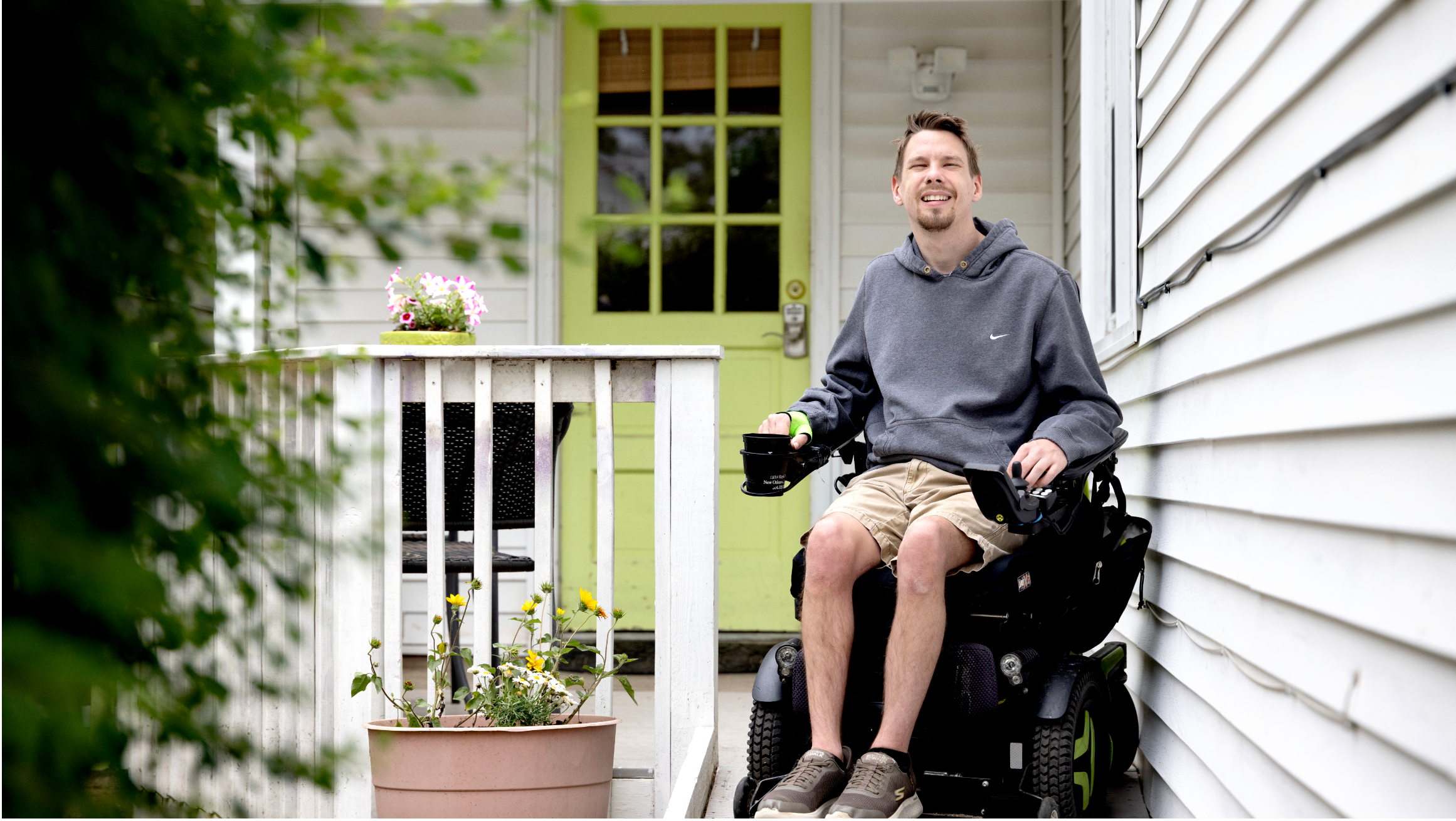
Just 4 percent (PDF) of US homes have a zero-step entryway with wide hallways and doorways, features that are essential for the 12 percent of Americans who have a mobility disability. An even smaller share—fewer than 1 percent of homes nationwide—are wheelchair accessible.
Such a staggering shortage of accessible housing has implications for health, well-being, and people’s ability to remain in their homes as they age or unexpectedly acquire disability through injury or illness. Unfortunately, national estimates may seem too far removed to spur local action. Even at the neighborhood level, a home’s inaccessibility often goes unnoticed until a disabled person visits or moves in.
Combining personal experiences with localized data can bring the statistics closer to home and give communities the insights and context they need to better understand and improve their specific circumstances. Every place is unique. The appropriate and feasible strategies to increase accessible housing will depend on the age, type, and cost of housing and the characteristics of the people who need it.
Who interprets the data also matters. People with disabilities—the ones most affected by the shortage—have critical insights that help create a fuller picture of the problem and effective solutions. A recent project by Gathering Strength, a disability-led organization in Louisville, Kentucky, offers an example for communities across the country. This work has helped focus attention on accessible housing, and the organization’s detailed documentation about their approach is a valuable resource for organizations undertaking similar efforts in their communities.
Measuring accessible housing need in Louisville, Kentucky
Louisville, population 640,000, is the most populous city in Kentucky, but local understanding of accessible housing has been scant. The city’s 2024 housing needs assessment reported that 20,000 new housing units had been added since 2010, but the report did not examine the accessibility of those units. Accessibility requirements for new construction are minimal and apply only to multifamily housing. The Kentucky building code requires 2 percent of multifamily housing developments of more than 20 units to be wheelchair-friendly units, and the Kentucky Housing Corporation (KHC), the largest funder of affordable housing, requires the lesser of 10 percent or 4 units of multifamily housing developments to be fully accessible. No corresponding requirement exists for single-family development, even though two-thirds of the city’s housing units are single-family detached homes.
With a grant from the Local Data for Equitable Communities program, Gathering Strength partnered with analysts at the Community Foundation of Greater Louisville on the report Disabling Infrastructures: Louisville’s Accessible Housing Gap. The team analyzed population and housing data to determine disability prevalence across demographic factors, assess current accessible housing supply, forecast needs, and identify racial and economic disparities.
For this project, Gathering Strength focused on wheelchair-accessible housing because it is the category with the most reliable data on demand and supply. As detailed in their report, the team compiled national data, including the American Community Survey, the American Housing Survey, the US Department of Housing and Urban Development Section 202 supportive housing data, and federally funded developments subject to Section 504 accessibility requirements. They supplemented the national sources with local data on building permits, KHC-funded affordable housing projects, and market-rate developments subject to Kentucky Building Code accessibility standards.
Using these sources, Gathering Strength estimates that of Louisville’s 330,000 housing units, only 3,000 are wheelchair accessible (fewer than 1 percent), whereas 18,000 households include a wheelchair user. In other words, there is 1 accessible housing unit in Louisville for every 6 households that need one. Louisville’s accessible housing options are especially limited at deeply affordable levels. There are just 586 affordable, accessible multifamily units for people with low incomes, and only 1,122 accessible Section 202 units reserved for older adults with low incomes.
Gathering Strength also found that poverty rates are higher among people with disabilities in Louisville; more than 20 percent are living below the federal poverty level, compared with 14 percent of nondisabled peers. And disabled renters and homeowners alike experience greater housing cost burden. Given this, the lack of affordable units is particularly troubling.
What other communities can learn from Louisville
Although Louisville is fortunate to have documented statistics on the city’s accessible housing shortage, similar challenges exist in communities nationwide. Acknowledging this reality and supporting it with data are critical first actions.
“Accessible housing is not a luxury. It is essential infrastructure, and the lack of it is a measurable public health emergency with consequences for tens of thousands of residents.”—Elizabeth Fust, Gathering Strength
The next step is to design policies that encourage accessible housing and allocate new resources where needed. Gathering Strength presents several recommendations for communities to consider, some of which have been enacted elsewhere already:
- To encourage the production of new accessible housing, local governments can track accessible units in the development pipeline and introduce new accessibility requirements for new development. Ohio has joined other states in adopting more-recent building codes that have expanded accessibility requirements. State housing finance agencies in Virginia and Georgia have raised the baseline of current law for accessible units by requiring 5 to 10 percent of all affordable multifamily developments to be wheelchair accessible.
- Massachusetts built a housing navigation tool to match people with disabilities to available accessible units, a strategy that can help locate accessible housing to residents who need it.
- Pima County, Arizona, adopted a local ordinance requiring homes to be visitable by neighbors with disabilities—a vital facet of community living.
- Finally, home modification programs can help residents with low incomes pay for needed home retrofits or adaptations.
Gathering Strength’s report has already led to early signs of progress in Louisville and across the state. The KHC agreed to publish voluntary accessibility guidelines for single-family housing drafted by Gathering Strength Executive Director Elizabeth Fust. Fust was invited to present a breakout session on accessible housing at the KHC statewide conference. Locally, Gathering Strength is exploring a partnership with Louisville’s largest nonprofit affordable housing developer to increase accessible housing options and is building coalitions with Louisville Metro and housing and disability advocates at the Metropolitan Housing Coalition and Center for Accessible Living.
Above all, it is essential to involve people with disabilities in housing policy and planning. Inviting deep personal experience, subject-matter expertise, and passion, along with data, will help communities like Louisville to plan for a future in which homes are widely accessible to all.